Burano: The Island of Colour in the Venetian Lagoon
Bright houses, quiet canals and a lace-making heritage make Burano one of the lagoon's most charming villages.
Venetian Lagoon, Italy · 8 min read · IGANAVI Editorial Team
Published March 12, 2026 · Updated November 16, 2026
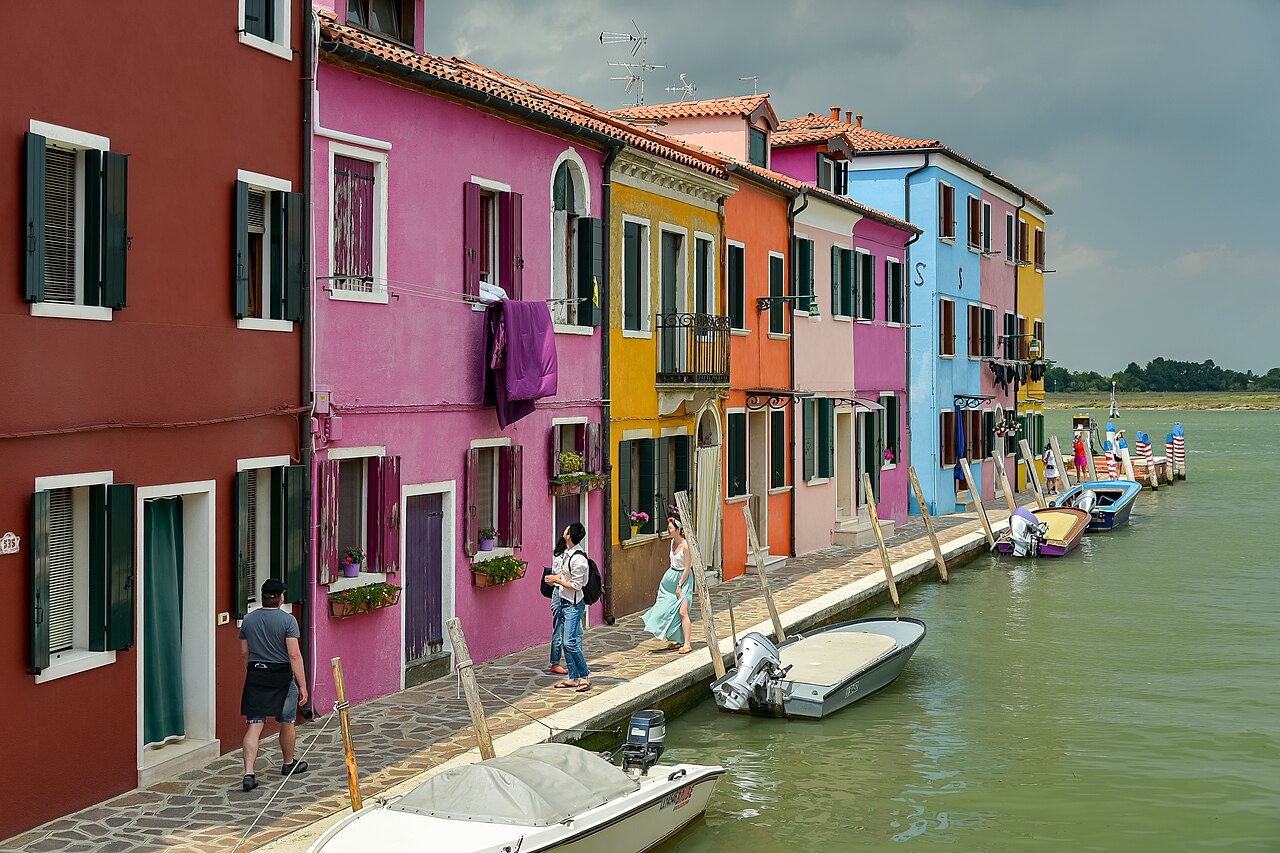
Burano announces itself in colour, but its quieter details stay with you just as strongly: the knock of a boat against its mooring, a lace pattern fine enough to resemble a drawing, the smell of baking behind a shop door. The painted houses are wonderful. They are also homes, gathered around canals in a working lagoon community rather than arranged as an outdoor exhibition.
Coming from central Venice changes your sense of scale. Water opens around the boat, the skyline falls back, and the northern lagoon becomes a landscape in its own right. Give that journey some attention. Burano makes more sense when it feels like an island reached across water, not another attraction on a crowded urban checklist.
Getting there across the lagoon
ACTV vaporetto line 12 connects Venice's Fondamente Nove with Burano, serving other lagoon stops along the route. Check the current ACTV timetable for your date, departure stop and direction. Service patterns and journey times can change, and seasonal crowding can mean waiting for another boat rather than boarding the first one that appears.
Fondamente Nove is not beside the railway station or St Mark's Square. Allow time to reach it through Venice, particularly with luggage or anyone who finds bridges difficult. At the waterfront, confirm the correct boarding point on the signs. Several services use the area, and following the largest queue is not a reliable navigation method.
Tickets and the journey home
Validate your ticket as required before boarding and check what your chosen transport product covers. A single journey ticket and a timed travel pass serve different needs; compare them against the journeys you actually intend to make. Do not assume that an airport boat service is included in an ordinary urban transport pass.
Before you start exploring, look up the return timetable. Late light can be beautiful, but it should not leave you improvising transport after the useful services have finished. Keep a charged phone and an offline note of your route. On busy days, leave a little margin for queues at the landing stage.
Colour without the fairy tale
Pink sits beside green, and an ordinary doorway becomes a startling composition against blue plaster. Reflections break the colours into strips whenever a boat passes. The pleasure is not limited to one famous viewpoint; a short walk away from the busiest canal often reveals a different arrangement of windows, shutters and water.
The familiar story that fishermen painted their homes brightly to recognise them in fog is best treated as local lore rather than a complete, proven explanation. Burano's painted identity developed over time, and repainting is subject to local controls. Enjoy the tradition without turning a charming explanation into established history.
Photographing a place where people live
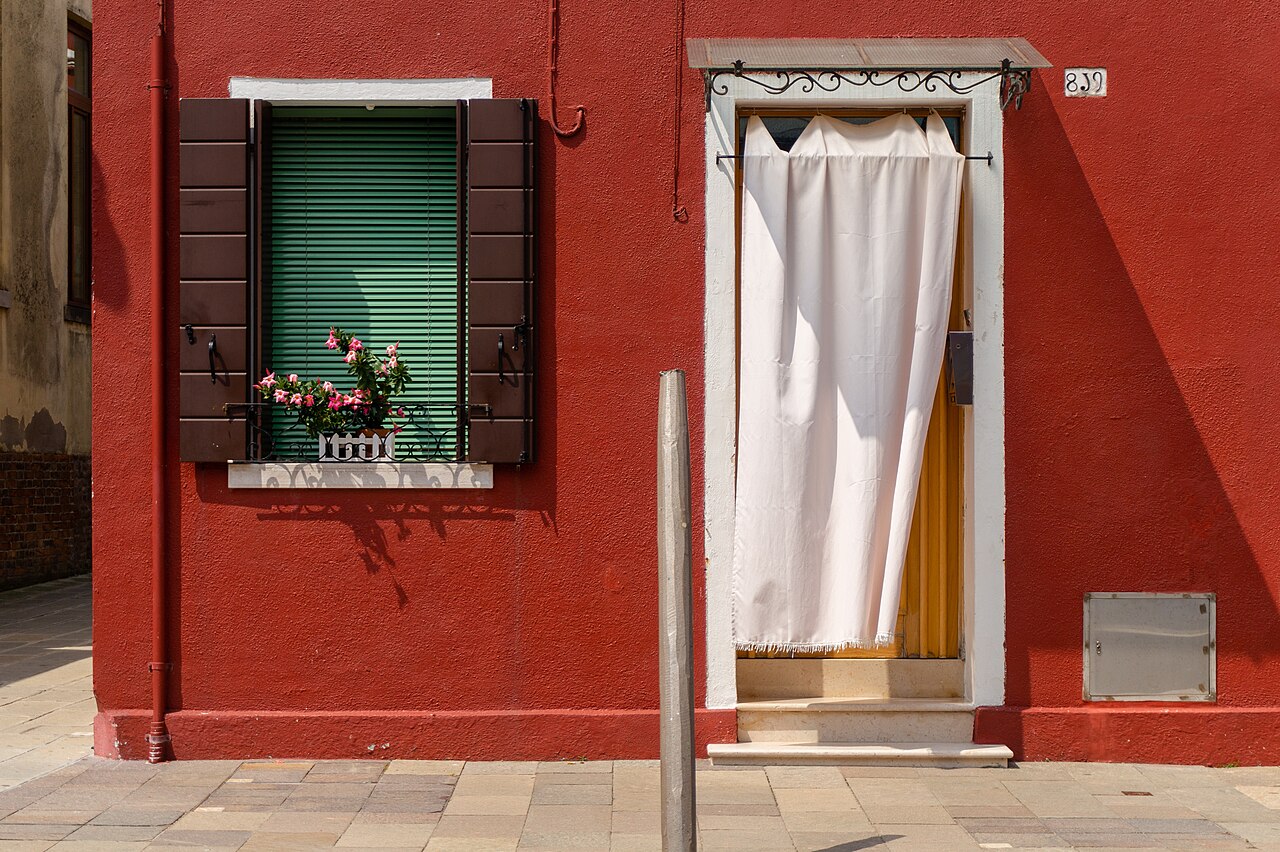
A doorstep with flowers is still somebody's entrance. Avoid sitting on private steps, leaning against shutters or moving objects to improve a picture. If someone is inside an open door or window, lower the camera unless you have permission. The same courtesy applies when children are playing beside the canal.
Try photographing the relationship between houses and water rather than collecting only close views of individual doors. Reflections, a moored boat and the shape of a small bridge can tell you more about the place. You dont need to stand in the middle of a narrow crossing to find an interesting composition.
Lace: look closely, ask gently
Burano's lace tradition deserves time beyond a glance at a shop window. Needle lace involves extraordinary patience, with fine threads worked into intricate designs. Historically, the craft drew on the labour and skill of local women, and its story includes changing fashions, commercial pressures and efforts to preserve specialist knowledge.
The Lace Museum, part of Venice's civic museum network, provides context through its collections and interpretation. Check the official MUVE museum information for opening days, admission arrangements and any temporary closures. A museum visit is especially useful if the difference between handmade needle lace and machine-made decoration is not yet clear to you.
Buying something with a known origin
Not everything sold on Burano was made there. Ask where an item was produced, whether it is handmade, and what technique was used. A careful seller should be able to explain what you are considering without relying solely on the island's reputation. Intricate handmade work represents substantial labour, so a very low price deserves questions.
There is no obligation to buy lace to appreciate it. A conversation, a museum visit or simply a more attentive look can be enough. If you do purchase something delicate, ask about washing and storage rather than assuming it can be treated like ordinary household fabric.
A small island with everyday rhythms
The leaning campanile of San Martino provides a useful landmark above the roofs. Its tilt is striking, but the surrounding streets are worth exploring at ground level too. Around the main thoroughfares, shops and restaurants draw visitors; elsewhere, washing, shopping and boat maintenance continue alongside tourism.
Burano is made up of small islands linked by bridges. Distances are modest, yet frequent crossings can matter for visitors with reduced mobility or pushchairs. Do not interpret a short route on a map as a completely step-free one. Ask ACTV about current boarding assistance and check accessible route information before committing to a particular walk.
A bridge also links Burano with Mazzorbo. Crossing over offers a change of atmosphere, with more open space and a less densely built setting. Follow public paths, respect cultivated land and resist treating every quiet corner as an invitation to wander into private property.
Lunch, biscuits and a little patience
Seafood is central to the local food tradition, although menus naturally vary with the business and available ingredients. Fish risotto can be a rewarding choice when it is being properly prepared, rather than something to squeeze into a hurried connection. Ask about preparation time and minimum orders before deciding.
For a portable taste of the island, look for bussolai, the traditional rich biscuits commonly shaped into rings, and the related S-shaped esse. They travel more easily than a plate of seafood and make a useful small gift. Buy an amount you will actually eat; the best souvenir need not fill half a suitcase.
At lunchtime, choose according to the menu, welcome and your appetite rather than a promise that a side street automatically guarantees authenticity. Read displayed prices and ask about anything unclear before ordering. A table in shade can be worth more than a coveted canal-side position on a very hot afternoon. A few extra minutes makes lunch feel less like another queue.
Torcello, or simply more Burano?
Torcello makes an absorbing companion visit, with a much quieter landscape and the celebrated mosaics of the Basilica of Santa Maria Assunta. Check current boat connections and monument opening arrangements rather than assuming you can simply walk across from Burano. Religious buildings may have their own visiting and photography rules.
Combining Burano, Murano and Torcello in a single day is possible, but it can leave most of the day structured around boarding points. If lace, photography or a slow lunch is your priority, Burano with just one neighbouring island may be more rewarding. Leaving something for another visit is not a planning failure.
Practical tips, including the Venice access fee
The Venice access fee applies to the historic centre on designated days and within specified hours. Under the published 2026 arrangements, the minor lagoon islands, including Burano, are excluded. However, visiting the historic centre on your way there can raise a separate question about payment or exemption. Check the official municipal access-fee portal for your date, route and circumstances; an ACTV ticket is not the same thing as access-fee compliance.
- Carry water and sun protection; open waterfronts can feel exposed even when the boat ride was breezy.
- Use designated places to sit and keep bridges and doorways clear, especially when stopping for photographs.
- Check museum times before choosing your outward boat, since a late arrival may leave little visiting time.
- Take rubbish to an appropriate bin or carry it away, and do not feed birds beside cafe tables or canals.
- Check weather and transport notices if fog, strong wind or unusually high water is forecast.
Frequently asked questions
How long should I allow for Burano?
Several unhurried hours let you walk, eat and look beyond the main canal. Add travel time from Venice separately. A museum visit, shopping conversation or trip to Torcello can easily justify a longer outing.
Is Burano worth visiting in winter?
Yes, if you welcome a quieter atmosphere and accept shorter daylight and reduced opening hours. Fog can be evocative but may affect transport. Check the forecast and return services rather than assuming a summer-style day will work unchanged.
Is Burano the same as Murano?
No. They are different lagoon islands. Murano is particularly associated with glassmaking, while Burano is known for its painted houses and lace tradition. They can be combined by public transport, but deserve to be understood separately.
Can I visit without paying the Venice access fee?
Burano itself is excluded under the published 2026 minor-island arrangements. Whether your wider itinerary requires payment or an exemption depends on visiting the historic centre during applicable periods and on your circumstances. Verify those details on the official portal before travelling.
Related guides
Santorini, Greece
Santorini's Villages Beyond Oia
Hilltop Pyrgos, cliffside Imerovigli and the wine villages of the south reveal a quieter side of Santorini.
Island Villages · 9 min read
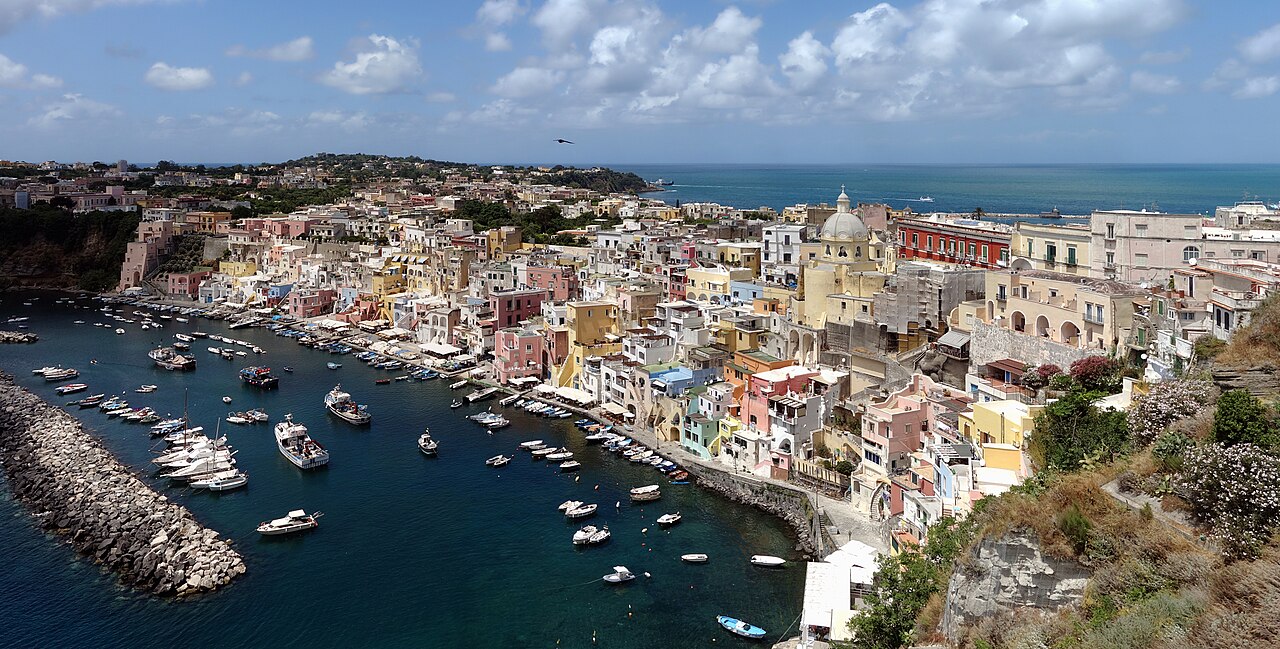
Bay of Naples, Italy
Procida: The Quiet Island in the Bay of Naples
Pastel harbours and lemon gardens make Procida a gentle alternative to its famous neighbours.
Island Villages · 8 min read

Fiji, South Pacific
Fiji's Island Chains: The Yasawas and Mamanucas
Two island groups off Viti Levu offer reef-fringed beaches, village warmth and easy access by boat.
Tropical Islands · 8 min read